The Impact Of Technology On Business
Automation And Streamlined Processes
Advancements in technology have led to increased automation and streamlined processes within businesses. Tasks that were once time-consuming and prone to human error can now be automated, allowing employees to focus on more strategic and creative aspects of their work. This has resulted in improved efficiency, reduced costs, and faster turnaround times. Technologies such as artificial intelligence (AI), machine learning, and robotic process automation (RPA) have transformed industries like manufacturing, logistics, and customer service.
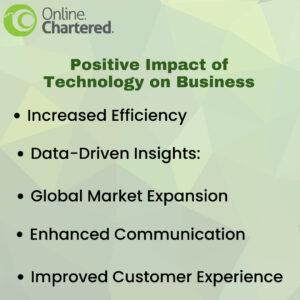
Positive Impact of Technology on Business
- Increased Efficiency: Technology has greatly improved business efficiency by automating repetitive tasks, streamlining processes, and reducing manual errors. This allows employees to focus on more strategic and value-added activities, leading to increased productivity and cost savings.
- Enhanced Communication: Modern communication technologies, such as email, video conferencing, and collaboration tools, have revolutionized how businesses communicate internally and externally. Teams can now connect and collaborate in real time, regardless of their geographical locations, leading to improved decision-making and faster response times.
- Global Market Expansion: Technology has broken down barriers to entry and allowed businesses to expand their reach globally. E-commerce platforms and digital marketing tools enable companies to sell their products and services to customers around the world, opening up new markets and revenue streams.
- Improved Customer Experience: With technology, businesses can provide personalized experiences to their customers. Through data analytics and customer relationship management (CRM) systems, companies can understand their customer’s preferences and behavior, tailoring their offerings and communications accordingly. This leads to higher customer satisfaction and increased loyalty.
- Data-Driven Insights: Technology allows businesses to collect and analyze vast amounts of data, providing valuable insights for decision-making. By leveraging data analytics, companies can identify market trends, customer preferences, and areas for improvement, enabling them to make informed strategic decisions and stay ahead of the competition.
Negative Impact Of Technology On Business
- Cybersecurity Risks: As businesses rely more on technology, they become vulnerable to cyber threats and data breaches. Hackers and malicious actors continuously develop sophisticated methods to exploit vulnerabilities in systems, putting sensitive business and customer data at risk. Companies must invest in robust cybersecurity measures to protect themselves and their stakeholders.
- Workforce Disruption: Technological advancements, such as automation and artificial intelligence, have the potential to disrupt the workforce. Certain jobs may become obsolete or be replaced by machines, leading to job displacement and the need for upskilling and reskilling of employees. Businesses must navigate these changes responsibly to ensure a smooth transition for their workforce.
- Dependency on Technology: While technology offers numerous benefits, businesses can become overly dependent on it. System failures, technical glitches, or power outages can bring operations to a halt, causing significant disruptions and financial losses. It is crucial for businesses to have contingency plans and backup systems in place to mitigate these risks.


Comments
Post a Comment